HEAD
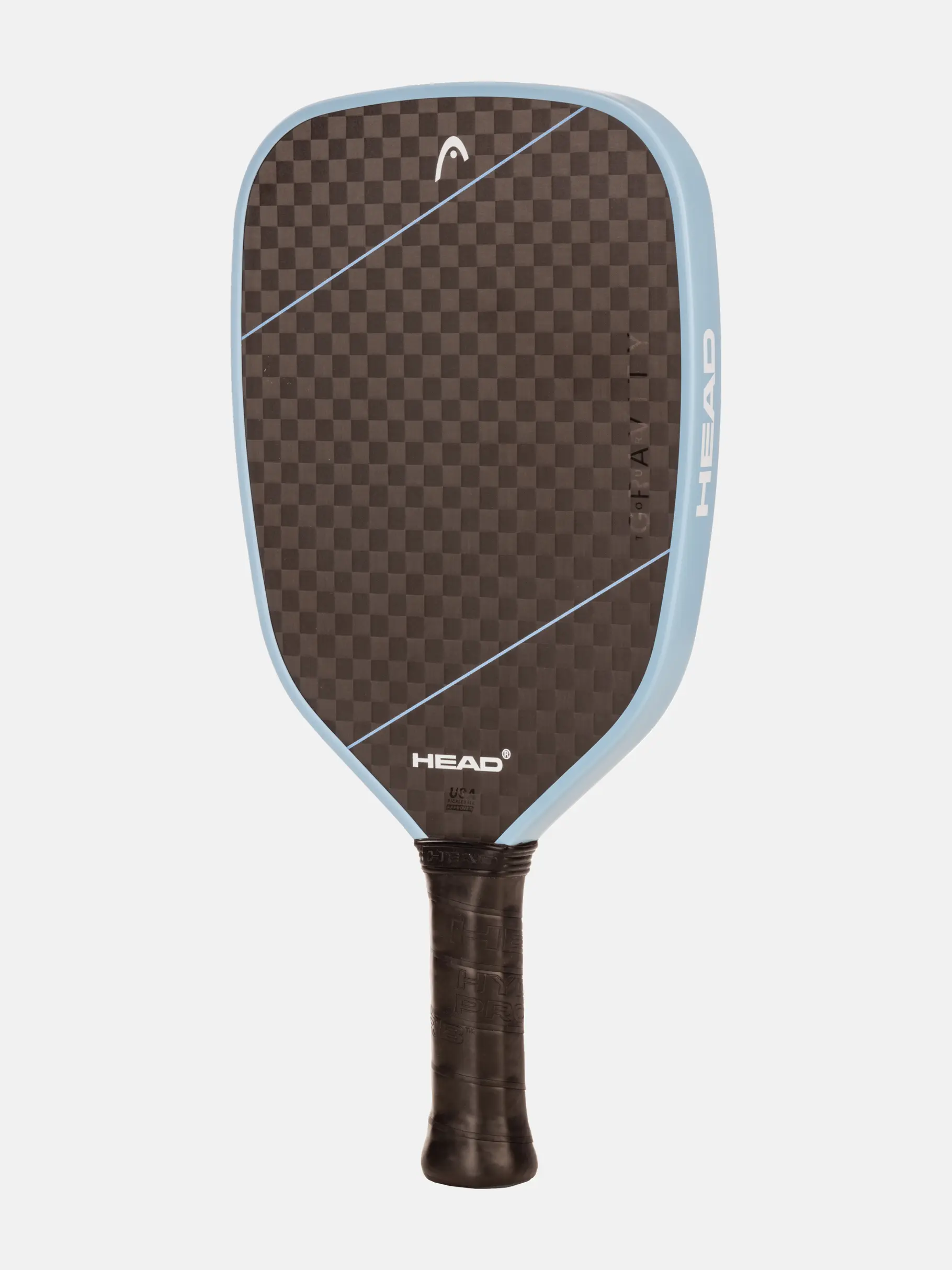
Gravity Tour (2025)
HEAD's control paddle: a thick 17mm core under a 12k raw carbon face, heavy at 8.5 oz with a short 4.9-inch handle, built to absorb pace.
- Shape
- Standard
- Core
- 17mm
- Face
- Raw carbon

Best pickleball paddles for spin
Spin comes from the face, not the shape. Here is what actually grips the ball, and what wears out.
Reviewed Sep 16, 2026
Spin is the one paddle characteristic with a simple, honest answer: it comes from the surface. A raw carbon fiber face grips the ball for a fraction longer than a painted or fiberglass one, and that extra grip is what turns a swing path into rotation.
Everything else that gets marketed as a spin feature, including shape, core thickness and edge construction, matters far less than what the face is made of.
A raw carbon face is unpainted. You are hitting the woven fibre itself, and the natural peaks of that weave bite into the ball's plastic surface. Painted and clear-coated faces put a smooth layer between the weave and the ball, which reduces grip no matter how the paddle is marketed.
Below raw carbon sits textured or 'friction' carbon, where the grit is applied in a coating. It spins well when new. Below that, fiberglass, which is livelier and more powerful but noticeably slicker, and graphite, which is the least grippy of the common faces.
Aramid and Kevlar faces, which are newer, sit in the same broad band as textured carbon and are usually chosen for their softer, more dampened feel rather than for outright spin.
Face texture is consumable. Every ball you hit, and especially every ball you scrape off a rough outdoor court, smooths the surface slightly. A raw carbon paddle that produced heavy spin in month one will produce less in month twelve, and the decline is gradual enough that most players do not notice until they pick up a new paddle.
Nothing restores it. Cleaning the face with a damp cloth removes ball residue and helps a little, but abrasive cleaning damages the fibre. Treat spin as something you pay for again when you replace the paddle, and factor that into whether a $230 paddle or a $100 one is better value for how often you play.
A grippy face amplifies a brushing swing path. It does nothing at all for a flat one. If you are hitting through the back of the ball, a $250 raw carbon paddle will produce almost exactly as much spin as a $60 fiberglass one.
The technique that generates topspin is a low-to-high swing where the face brushes up the back of the ball rather than driving through its centre. On the dink, it is a shorter version of the same motion, and it is what makes a dink drop steeply into the kitchen instead of floating. Our technique library covers both.
Brands publish spin figures in revolutions per minute, and reviewers publish their own. We do not list them, for one reason: they are not comparable. Different testers use different swing speeds, ball types, temperatures and measurement methods, and there is no governing standard for how the figure is produced.
What is standardised is the roughness limit. USA Pickleball sets a maximum surface roughness for approved paddles, which is why no legal paddle can be dramatically grippier than the rest of the top tier. If you play sanctioned events, check that any paddle you buy appears on the approved list.
Chosen from the database by the criteria above. Every spec was checked against the manufacturer on the date shown on each card.

HEAD
HEAD's control paddle: a thick 17mm core under a 12k raw carbon face, heavy at 8.5 oz with a short 4.9-inch handle, built to absorb pace.

Six Zero
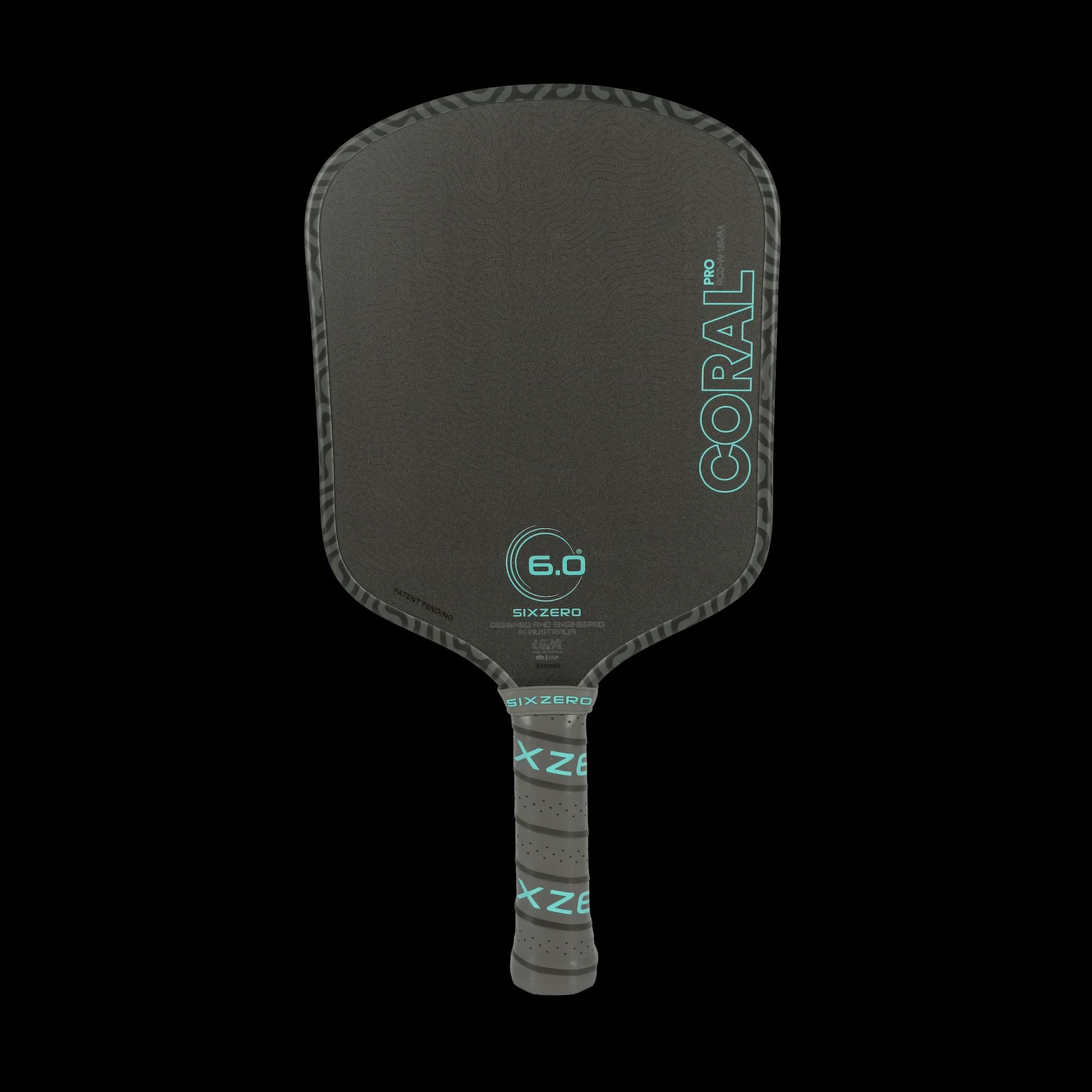
The widebody Coral Pro puts stability first, with the highest published twist weight and lowest swing weight of the three Coral Pro shapes.

Selkirk
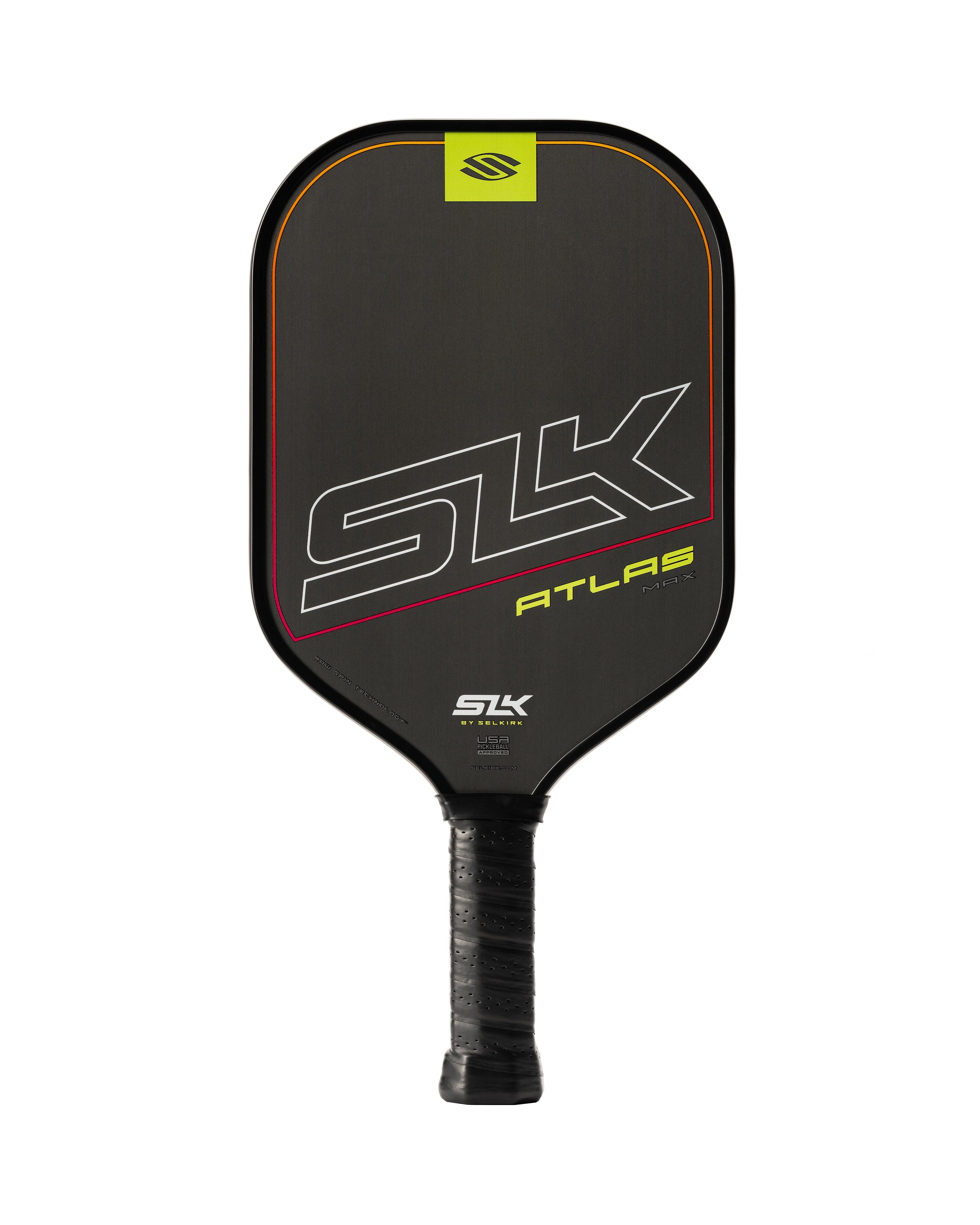
Selkirk's entry-level SLK line in the standard Max shape: a raw carbon face over a 16mm polymer core at $80, with a one-year warranty.
ProXR
A 16mm raw T700 carbon paddle with a wide 16 x 8 inch face, for players who want a large, forgiving hitting area and control from a thick core.

Selkirk
The wider 8-inch Dauntless with a 16mm foam core and raw T700 carbon face, for players who want spin with a forgiving, quick-handling shape.

Gearbox
A 16mm wide-body Gearbox paddle with an 8-inch-wide face, a 5.5-inch handle and Gearbox's patented carbon rib core.