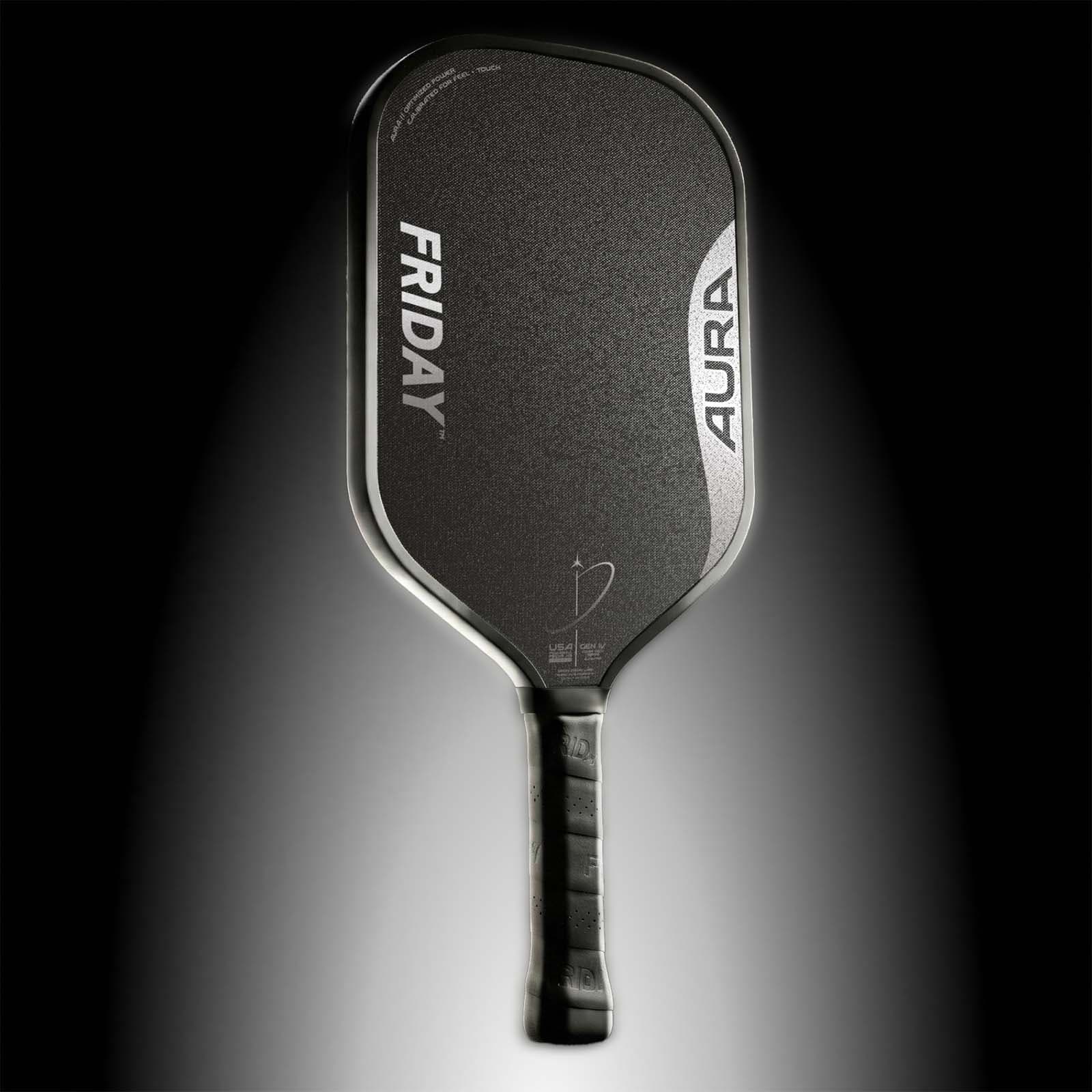
Friday
Aura Gen 4 16mm
Friday's full-foam-core paddle: an EPP foam center inside a foam ring instead of honeycomb, under a carbon-fiberglass-carbon T700 face.
- Shape
- Elongated
- Core
- 16mm
- Face
- Raw carbon

Best pickleball paddles for intermediate players
For the 3.0 to 4.0 player who has a real third shot and wants a paddle that rewards it rather than one they will outgrow.
Reviewed Sep 16, 2026
Intermediate players get more out of a paddle change than anyone else. You have the consistency to use spin, the touch to use a controllable paddle, and enough court time to notice the difference. You also, for the first time, have preferences.
This is also where the biggest mistake happens: buying the paddle a 5.0 player uses. Tour-level paddles tend to have small sweet spots and high swingweights, which punishes the shots you are still tightening up.
If you are moving off a fiberglass or graphite paddle, the face material is the change you will feel first and most. A raw carbon face lets you brush the ball rather than just hit it, and the two shots that transforms are the topspin drive and the topspin dink.
Everything else on the spec sheet is a smaller adjustment by comparison. Get the face right, then tune shape and thickness around your game.
This is the question most intermediate players are actually asking, and it comes down to what loses you points now.
If you lose points by popping resets up, hitting drops long, or getting handcuffed by hard drives, you want 16mm. The thicker core absorbs pace and gives you a bigger margin on soft shots.
If you lose points because your drives get blocked back easily and you cannot win a hands battle, you want 14mm. The thinner core returns more energy, so counters come off quicker.
Several brands now sell the same paddle in both thicknesses, which makes this an unusually clean decision: same shape, same face, same handle, one variable. We work through one of those pairs spec by spec in our guide to 14mm vs 16mm paddles.
Hybrid shapes are the safest choice at this level. They keep most of the forgiveness of a standard shape while adding a little reach and leverage.
Go elongated if you play singles, if you like to drive, or if your reach at the kitchen line feels short. Accept that the sweet spot moves up the face and gets smaller, and that mishits will feel worse.
Handle length is the spec most people forget. If you hit a two-handed backhand, you want 5.5 inches or more. Below about 5.25 inches your bottom hand runs out of room and you will grip down onto the throat, which is uncomfortable and unstable.
Static weight tells you what a paddle weighs on a scale. Swingweight tells you how heavy it feels when you swing it, because it accounts for where that mass sits.
Higher swingweight gives you stability and plow-through on drives; lower swingweight gives you faster hands at the net. Around 110 is quick, around 120 is substantial. Not every brand publishes it, and we leave the field blank rather than guess when they do not.
If you like your current paddle but want more stability, lead tape at the 3 and 9 o'clock positions is a cheaper experiment than a new paddle, and it is reversible.
Specs narrow the field; they do not pick the winner. Feel is real even when it is hard to quantify, and it is the reason two paddles with nearly identical numbers can suit different players.
Many pickleball specialty retailers run demo programs, and most clubs have players who will happily let you hit a few balls with theirs between games. Use the shortlist below as the list of paddles to ask about.
Chosen from the database by the criteria above. Every spec was checked against the manufacturer on the date shown on each card.

Friday
Friday's full-foam-core paddle: an EPP foam center inside a foam ring instead of honeycomb, under a carbon-fiberglass-carbon T700 face.

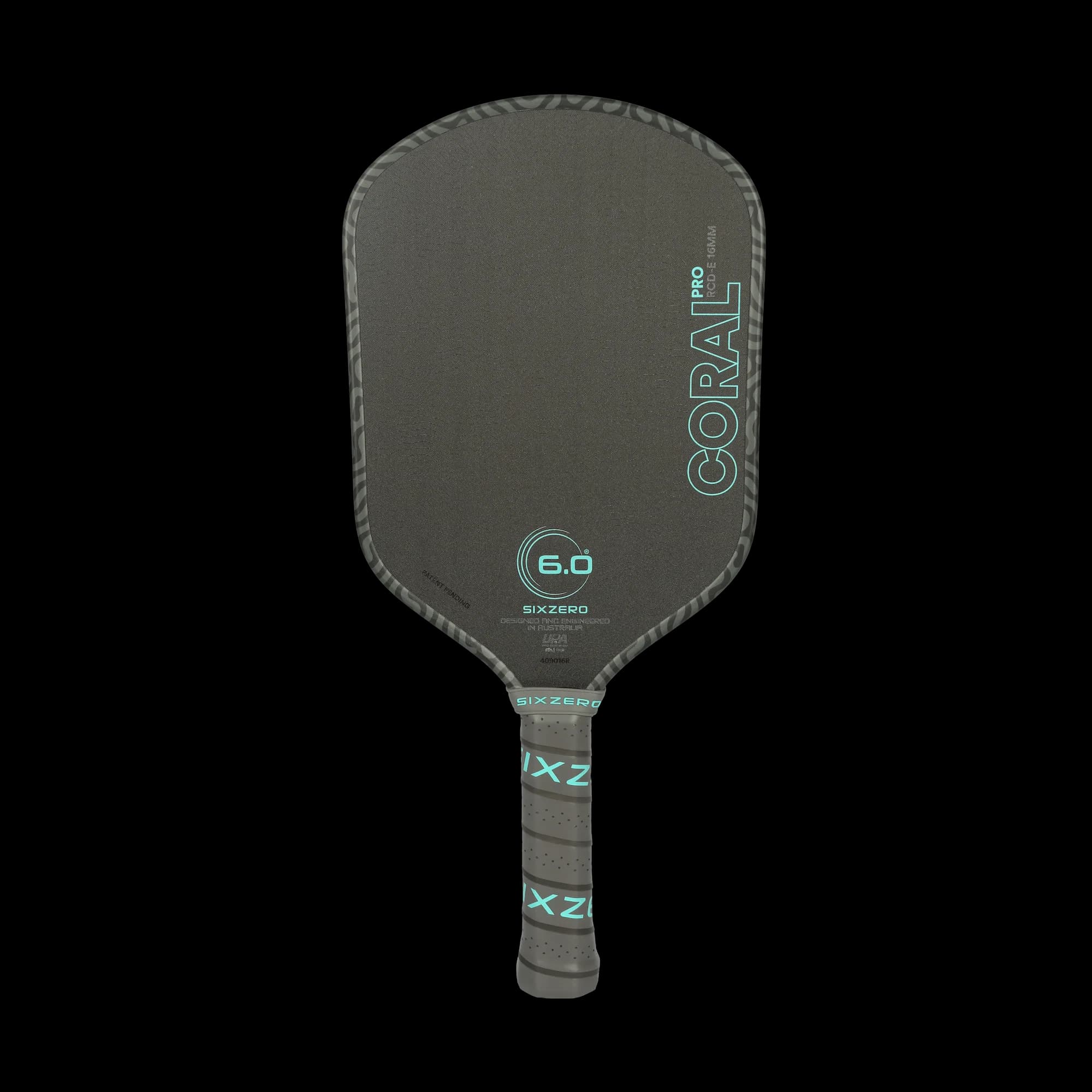
Six Zero
The elongated version of Six Zero's 16mm Coral Pro, trading some twist stability for extra reach and swing weight.

Six Zero
A 16.5 in elongated Coral with a longer 5.75 in handle for reach and two-handed backhands.
Franklin
The traditional-shape sibling of Franklin's FS Tour Dynasty: a raw T700 carbon face over a 16mm polymer core with a foam-injected perimeter, a short 5 in handle and a midweight-to-heavy 8.6-8.9 oz build.

Selkirk
A mid-priced 16mm foam-core paddle with a raw T700 carbon face in the elongated shape, for players who want spin and reach.

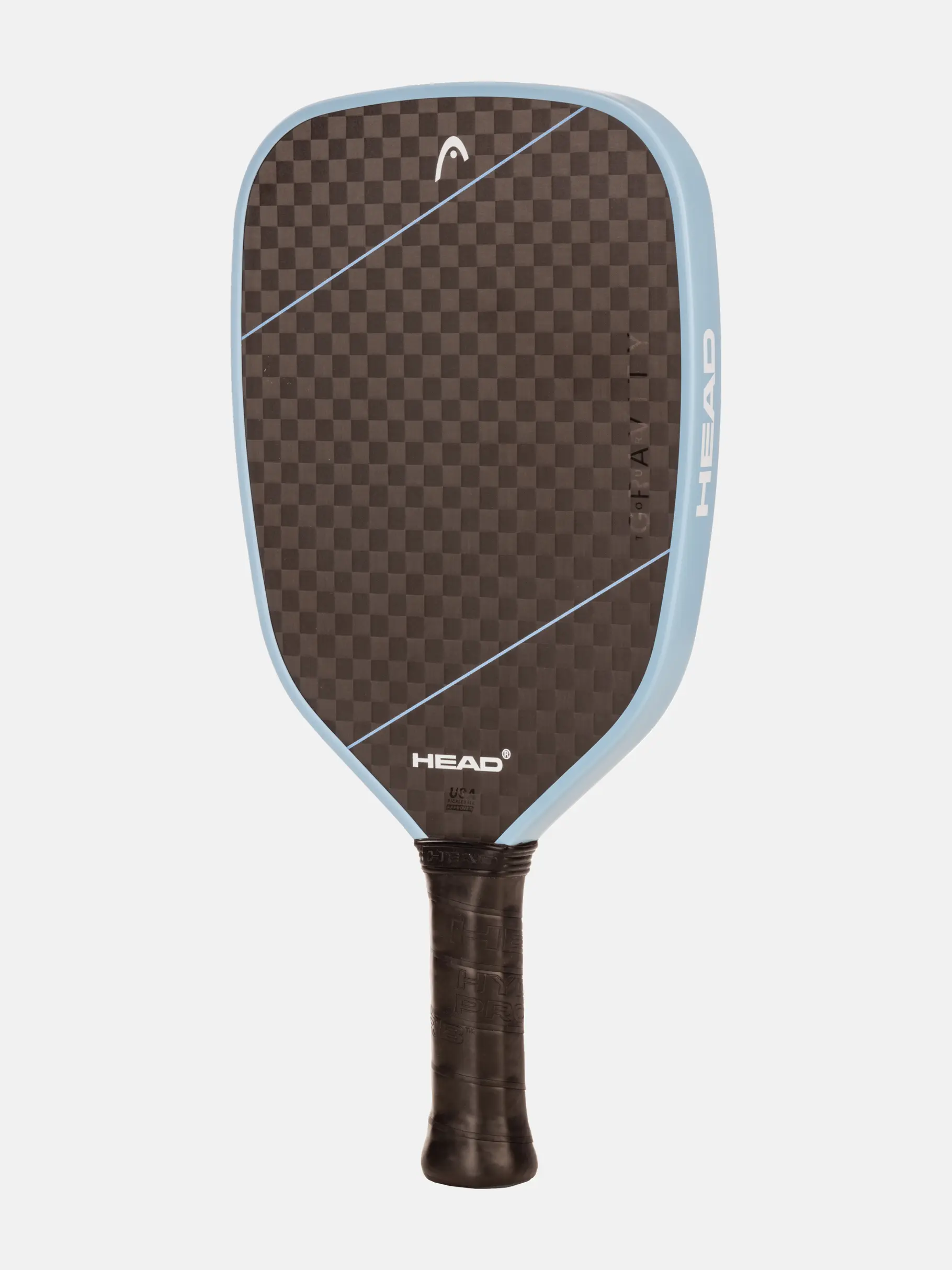
HEAD
HEAD's control paddle: a thick 17mm core under a 12k raw carbon face, heavy at 8.5 oz with a short 4.9-inch handle, built to absorb pace.