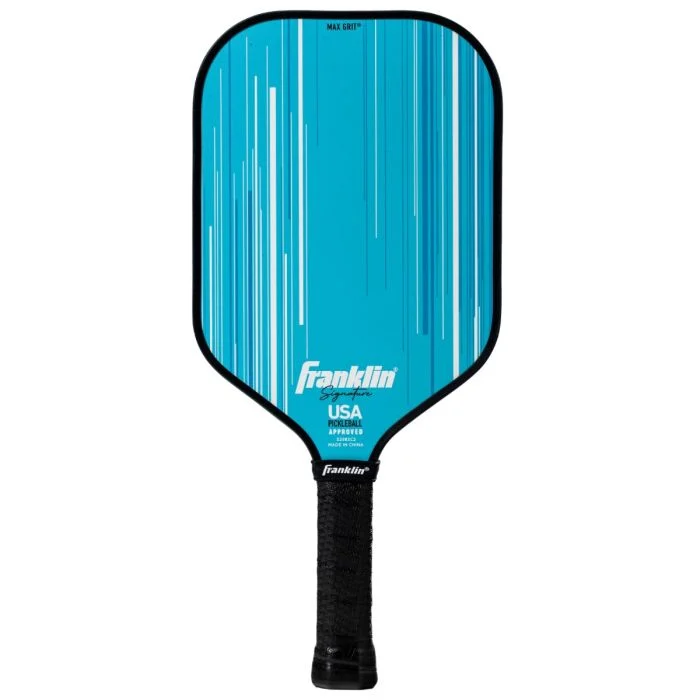
Franklin
Signature Series Fiberglass 13mm
The thinner, poppier version of Franklin's Signature Series: a 13mm core, MaxGrit fiberglass face and a long 5.6-inch handle at an entry price.
- Shape
- Elongated
- Core
- 13mm
- Face
- Fiberglass

Best power pickleball paddles
Thin cores, stiff builds and high swingweights, for players who drive, speed up and finish points with pace.
Reviewed Sep 16, 2026
Power paddles are the easiest category to shop badly, because power in pickleball is two different things that get sold under one word.
Pop is how much energy the paddle returns on a short, quick stroke: the flick, the counter, the speed-up. Plow-through is how much mass carries through the ball on a full swing: the drive, the overhead. Thin cores give you pop. Mass and swingweight give you plow-through. A paddle can have one without the other.
A 13 or 14mm core deforms less and springs back faster than a 16mm one, so the ball leaves quicker. Thermoforming and foam-injected perimeters add to this by stiffening the frame so less energy is lost flexing the edges.
The cost is forgiveness. Thin, stiff paddles have smaller effective sweet spots, and mishits are both less accurate and harsher on the hand. They also make the soft game harder, because a paddle that returns energy efficiently will return it on your resets too.
A heavier paddle, or one with its mass further from your hand, carries more momentum into the ball. That is why a heavy elongated paddle can feel powerful even with a thick core, and why a very light paddle can feel weak even with a thin one.
Swingweight is the number that captures this. Around 120 is substantial; around 110 is quick. If a brand publishes it, it will tell you more about how the paddle drives than the static weight will.
Our derived power score combines core thickness, weight, swingweight and shape into one number, which means a very thin, cheap fiberglass paddle can score high for pop while having none of the stability that makes a premium power paddle effective.
Read the power score alongside the sweet spot and control scores rather than on its own, and read the specs underneath both. This limitation is documented on our methodology page.
Before you spend, try lead tape. Two to four grams at the 10 and 2 o'clock positions on the paddle head raises swingweight and adds noticeable plow-through, for a few dollars and about ten minutes. Tape at 3 and 9 o'clock adds stability instead.
This is reversible, which makes it the cheapest experiment in pickleball. If adding weight makes your paddle feel better, you have learned something specific to look for in your next one. If it makes your hands feel slow at the net, you have learned that too.
Stiff, thin, high-swingweight paddles transmit more shock to the hand and forearm than thick, softer ones. If you have any history of tennis elbow or shoulder trouble, weigh that against the extra pace, and read our tennis elbow guide before buying.
Chosen from the database by the criteria above. Every spec was checked against the manufacturer on the date shown on each card.

Franklin
The thinner, poppier version of Franklin's Signature Series: a 13mm core, MaxGrit fiberglass face and a long 5.6-inch handle at an entry price.

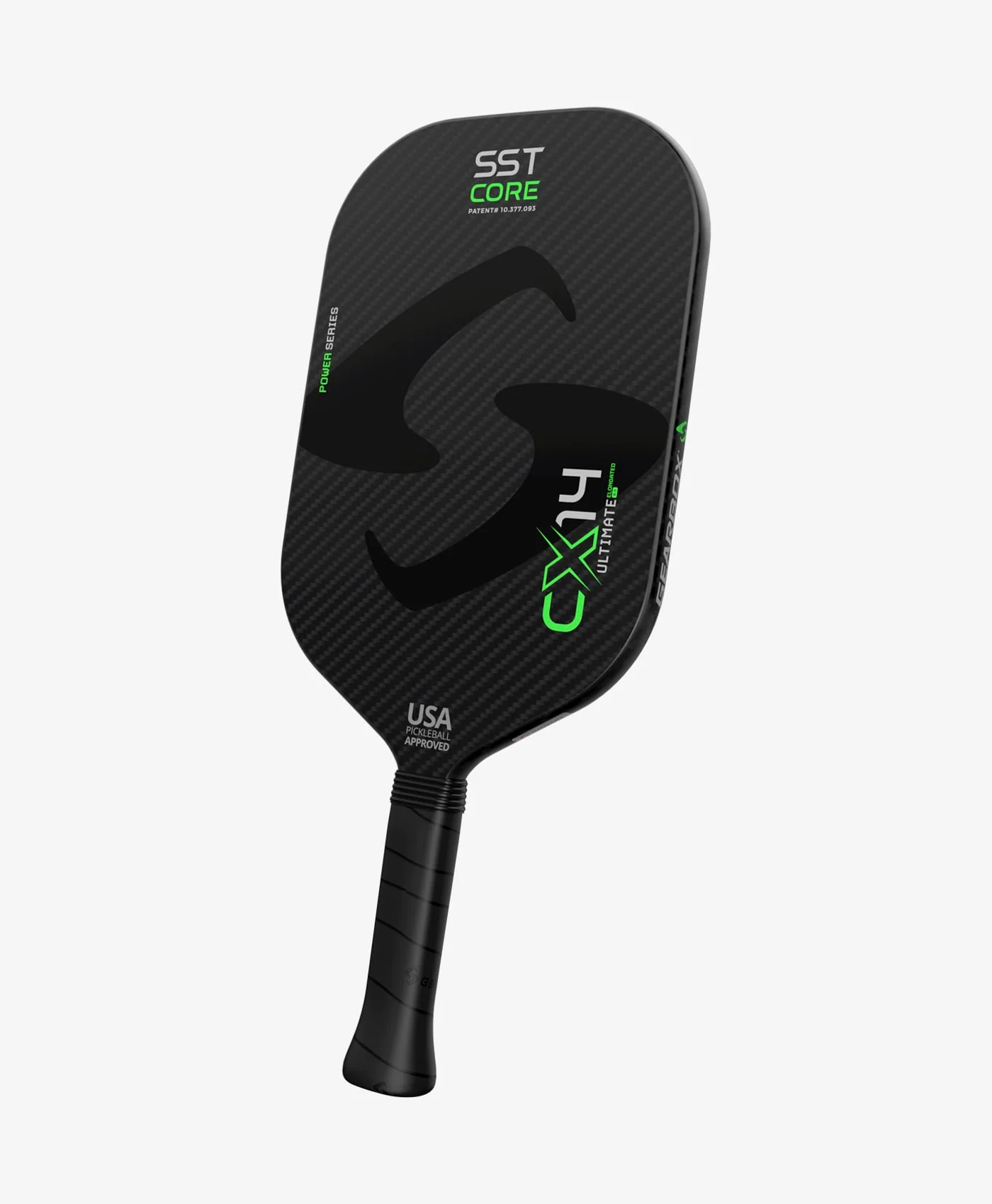
Gearbox
A one-piece carbon construction with no honeycomb core and no edge guard. Firm, fast and unusually durable, aimed squarely at power players.

Holbrook
The Metallic-face version of Holbrook's 14mm Arma T, a thermoformed foam-core power paddle with a dual-density core and an elongated handle.

Selkirk
A very thin 10mm, carbon-faced elongated paddle for experienced players who want a fast, firm feel and reach.

Holbrook
An edgeless, elongated 14mm carbon fiber paddle with corner weights and a 5.5-inch handle, suited to intermediate and advanced players who want quick hands and pop.

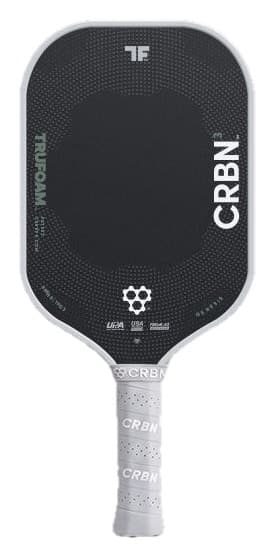
CRBN
The CRBN 3 TruFoam Genesis is a 14mm elongated paddle with a 100% foam core and a raw T700 carbon face over fiberglass, suited to intermediate and advanced players who want reach and spin.