Just Pickle Me
Holiday gift guide: paddle picks, gift cards and stocking stuffers $50 and under
Player in a ready position waiting for the serve

Best for beginners

Best pickleball paddles for beginners

Forgiving, affordable paddles that make learning easier, and which you will still be happy with six months from now.

Reviewed Sep 16, 2026

A beginner paddle has one job: make it easy to hit the ball cleanly. That means a big sweet spot, a core thick enough to absorb pace, and a weight that does not tire your arm in the third game.

The good news is that this is the easiest it has ever been to buy well. Around $80 to $100 now gets you a raw carbon face and a 16mm core, which is genuinely the same construction the better players on your court are using.

What matters when you are starting

Almost everything written about paddles is written for players who already have consistent contact. When you are new, the paddle's job is to forgive the shots you did not mean to hit.

  • A 16mm core. Thicker cores absorb the ball instead of firing it back, which makes it far easier to keep the ball in when you are still learning how hard to swing.
  • A wide or hybrid shape. Elongated paddles look serious and are harder to hit with. A wider face puts more paddle behind the ball.
  • About 7.8 to 8.2 ounces. Light enough to react at the net, heavy enough to be stable when someone drives at you.
  • A grip that fits. Too small and you squeeze to hold on, which is tiring and hard on the arm. You can always build a small grip up with an overgrip; you cannot shrink a big one.

Do you need raw carbon on day one?

Not strictly. You can learn the game perfectly well with a fiberglass or graphite paddle, and plenty of people do.

But raw carbon is the one upgrade that changes what shots are available to you. The texture grips the ball, which lets you brush up the back of it and produce topspin. Topspin is what makes a drive dip down into the court instead of sailing long, and it is the thing most self-taught players are missing at 3.0.

The practical argument is financial. A $60 fiberglass paddle plus the $120 raw carbon paddle you buy eight months later costs more than simply buying the $100 raw carbon paddle now.

The three honest price tiers

Under $60 is the try-the-sport tier. Usually graphite or fiberglass, usually a shorter handle, entirely adequate for a driveway or a once-a-month game.

Around $80 to $130 is where most beginners should buy. Raw carbon face, 16mm core, a handle long enough for a two-handed backhand if you want one. You will not outgrow this paddle when your game improves; you will just start using more of it.

Above $180 you are buying refinements that a new player cannot yet feel: a specific swingweight, a thermoformed edge, a particular balance point. That money is better spent on lessons, which will improve your game far more than any paddle.

What to ignore for now

Swingweight, twistweight and balance point are real and useful numbers, and they will matter to you eventually. At the start they are noise. The same is true of spin RPM claims, which are measured inconsistently across brands and are not comparable between them.

Also ignore what the pros use. Tour players choose paddles for a game built on pace and precision you do not have yet, and most of them are paid to play what they play.

When to upgrade

There are two honest signals. The first is that you can consistently land a third-shot drop and you now want more spin to shape it. The second is that you have developed a preference, for example you find yourself wishing the paddle were a little quicker at the net, or a little more solid against hard drives.

Until one of those is true, a new paddle will change how your gear looks and not how you play. When it is true, our Paddle Finder will weigh your answers against every paddle in the database.

Our picks

Chosen from the database by the criteria above. Every spec was checked against the manufacturer on the date shown on each card.

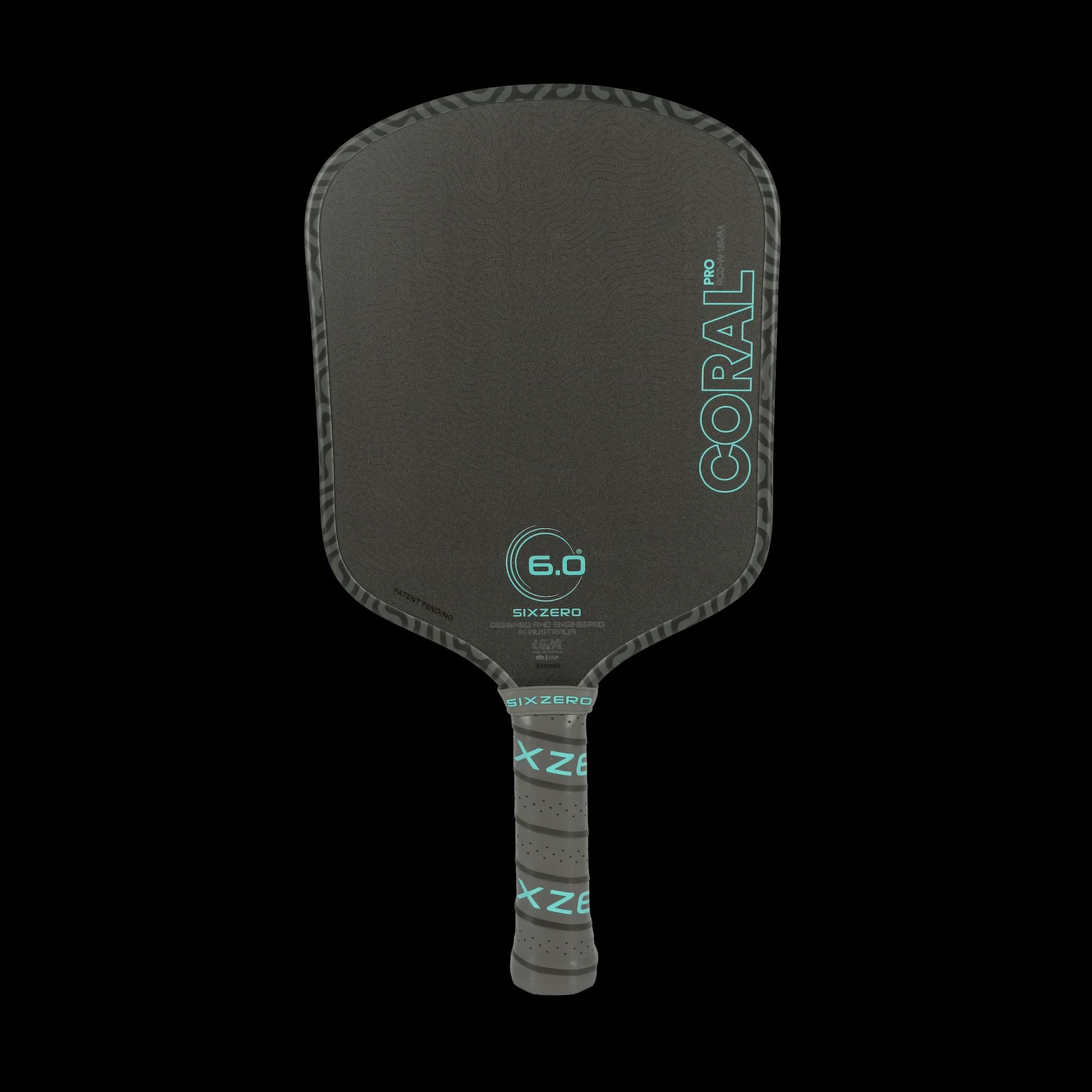
1Six Zero Coral Pro Widebody 16mm pickleball paddle, Electric Blue, front view

Six Zero

Coral Pro Widebody 16mm

The widebody Coral Pro puts stability first, with the highest published twist weight and lowest swing weight of the three Coral Pro shapes.

Shape
Widebody
Core
16mm
Face
Raw carbon
$220at JustPaddles · Oct 20
P 5C 7S 9
Verified Oct 20, 2026Details
2SLK Dauntless Widebody pickleball paddle, Electric Sunset

Selkirk

SLK Dauntless Widebody 16mm

The wider 8-inch Dauntless with a 16mm foam core and raw T700 carbon face, for players who want spin with a forgiving, quick-handling shape.

Shape
Standard
Core
16mm
Face
Raw carbon
$150at JustPaddles · Oct 20
P 5C 7S 9
Verified Oct 20, 2026Details
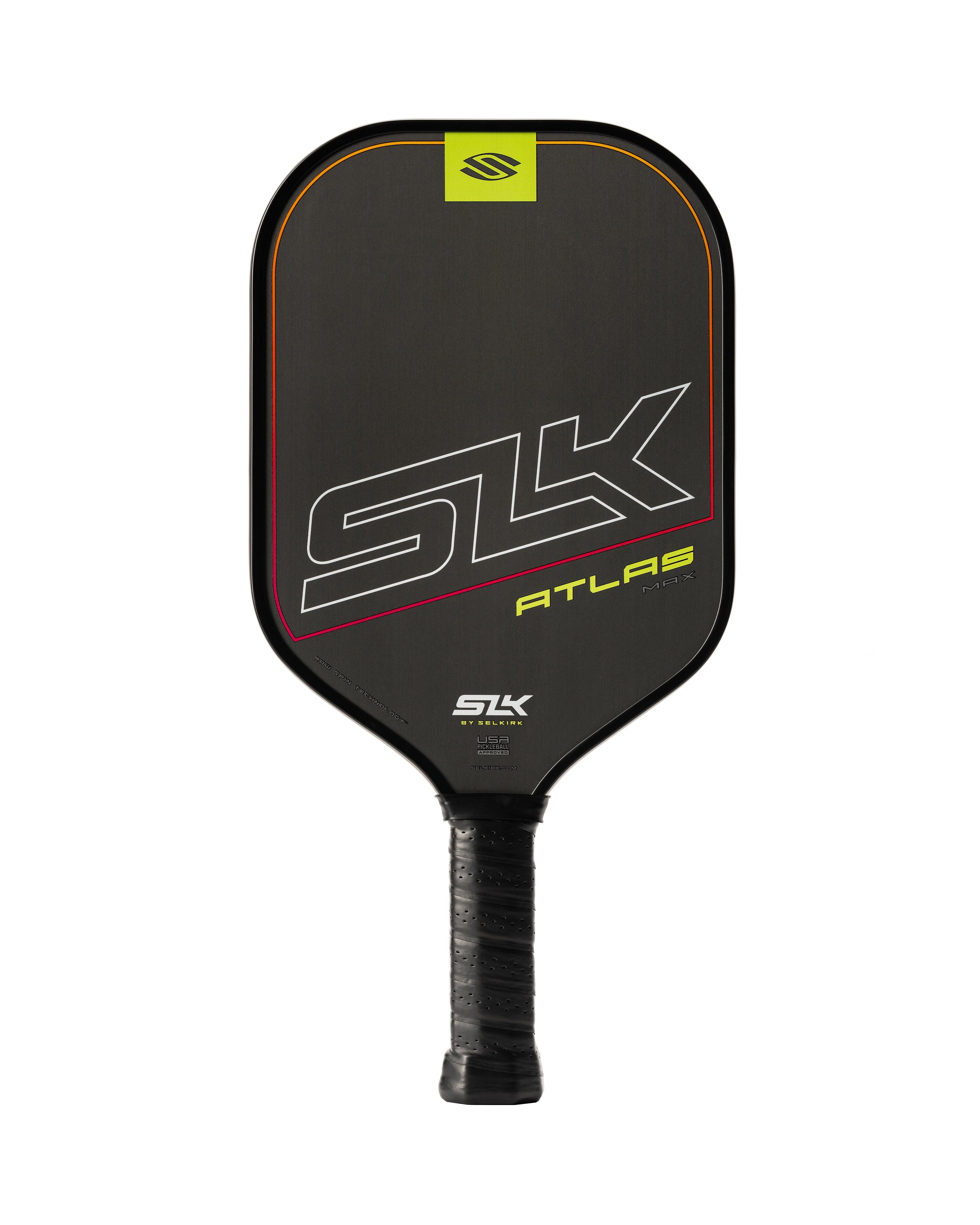
3Selkirk SLK Atlas Max pickleball paddle, front view

Selkirk

SLK Atlas Max

Selkirk's entry-level SLK line in the standard Max shape: a raw carbon face over a 16mm polymer core at $80, with a one-year warranty.

Shape
Standard
Core
16mm
Face
Raw carbon
$80
P 6C 7S 9
Verified Sep 15, 2026Details
4ProXR Sweet Spot Max 2 pickleball paddle in the Iconic black and blue colorway

ProXR

Sweet Spot Max 2 16mm

A 16mm raw T700 carbon paddle with a wide 16 x 8 inch face, for players who want a large, forgiving hitting area and control from a thick core.

Shape
Standard
Core
16mm
Face
Raw carbon
$90$150at JustPaddles · Oct 21
P 6C 7S 9
Verified Sep 25, 2026Sold out at brandDetails
5

Franklin

FS Tour Tempo 16mm

The traditional-shape sibling of Franklin's FS Tour Dynasty: a raw T700 carbon face over a 16mm polymer core with a foam-injected perimeter, a short 5 in handle and a midweight-to-heavy 8.6-8.9 oz build.

Shape
Standard
Core
16mm
Face
Raw carbon
$90$150at JustPaddles · Oct 20
P 7C 7S 9
Verified Oct 20, 2026Sold out at brandDetails
6SLK Valkyrie Widebody pickleball paddle with jade face and white grip

Selkirk

SLK Valkyrie Widebody 16mm

An entry-priced 16mm honeycomb widebody with a fiberglass face, aimed at beginner and developing players.

Shape
Standard
Core
16mm
Face
Fiberglass
$80at JustPaddles · Oct 20
P 7C 6S 6
Verified Oct 20, 2026Details

Common questions

What is the best pickleball paddle for a complete beginner?
A 16mm paddle in a wide or hybrid shape, weighing around 8 ounces, with a grip that fits your hand. A raw carbon face is worth the extra money if you expect to play regularly, because it lets you develop topspin rather than having to learn it later on new equipment.
Should a beginner buy a cheap paddle set?
Only if you are not sure you will keep playing. The two-paddle sets sold for under $50 use thin cores and untextured faces, and most players who stick with the sport replace them within a few months. If you already know you enjoy it, buy one good paddle instead of two poor ones.
Is a heavier or lighter paddle better for beginners?
Something in the middle, roughly 7.8 to 8.2 ounces. Very light paddles get pushed around by hard shots and force you to swing harder for depth. Very heavy paddles are stable but slow at the kitchen line and harder on the elbow and shoulder.
Does paddle grip size matter for beginners?
Yes, more than most people expect. A grip that is too small makes you squeeze to keep control of the paddle, which is tiring and is associated with arm strain. Most adults are comfortable somewhere between 4 and 4.5 inches in circumference, and you can add an overgrip to increase size but cannot reduce it.